How to Ace TOEFL Writing: Free Online Practice Strategies
Introduction
The TOEFL Writing section can be a significant hurdle for many test-takers aiming for a high score. It requires not only strong English proficiency but also strategic planning, clear organization, and effective argumentation. While dedicated preparation courses and tutors are beneficial, there are numerous free online resources and strategies you can employ to significantly boost your writing skills and confidence. Consistent practice is key, and with the right approach, you can master both the Integrated and Independent Writing tasks. This guide will walk you through actionable steps and introduce you to valuable tools, including how WritingPrep can enhance your practice with AI-powered feedback.
Understanding the TOEFL Writing Section
Before diving into practice, it's crucial to understand what the TOEFL Writing section entails. It consists of two tasks:
1. Integrated Writing Task
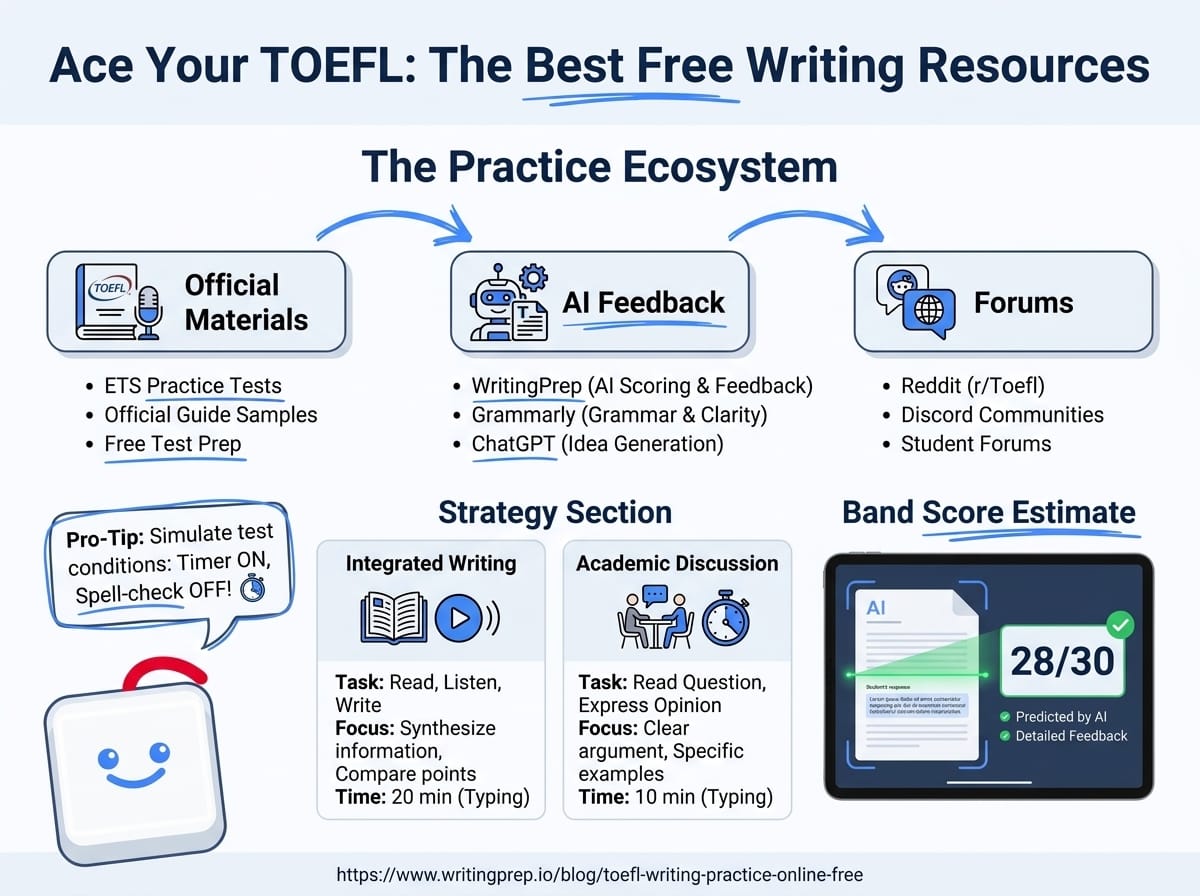
You'll read a short passage, listen to a lecture on the same topic, and then summarize and explain how the lecture challenges or supports points made in the reading. This task assesses your ability to synthesize information from multiple sources.
2. Independent Writing Task
You'll be presented with a topic and asked to write an essay expressing and supporting your opinion. This task evaluates your ability to develop ideas, organize an essay, and use appropriate grammar and vocabulary.
Both tasks require clear, coherent, and well-developed responses. Let's explore how to practice effectively for each.
Step 1: Master the Integrated Writing Task
The Integrated Writing task is about comprehension and synthesis. Here’s how to practice:
Practice Active Reading and Listening
Find practice tests that include both reading passages and audio lectures. As you read, identify the main idea and key supporting points. While listening, take concise notes, focusing on how the lecture points relate to the reading – do they contradict, support, or offer alternative explanations?
Structure Your Response Logically
A typical structure for the Integrated Writing Task includes:
- Introduction: State the main point of the reading and how the lecture relates to it.
- Body Paragraphs (2-3): Each paragraph should discuss one point from the reading and how the lecture responds to it, using specific details from both sources.
- Conclusion: Briefly summarize the relationship between the reading and the lecture (optional, but can add clarity).
Use Transition Words Effectively
Words and phrases like "in contrast," "furthermore," "however," and "consequently" are vital for creating a cohesive essay that clearly connects ideas from the reading and lecture.
Step 2: Excel in the Independent Writing Task
The Independent Writing task assesses your ability to construct a persuasive essay.
Develop Strong Arguments
For each practice topic, brainstorm relevant ideas and examples to support your stance. Think of personal experiences, observations, or general knowledge that can strengthen your arguments.
Organize Your Essay Clearly
A well-structured essay is easier to follow. Aim for:
- Introduction: Hook the reader, provide background, and clearly state your thesis.
- Body Paragraphs (2-3): Each paragraph should focus on a single main idea that supports your thesis, with topic sentences, explanations, and specific examples.
- Conclusion: Summarize your main points and restate your thesis in a new way, offering a final thought or implication.
Expand Your Vocabulary and Sentence Structure
Read widely to encounter new words and sentence constructions. When practicing, actively try to incorporate new vocabulary and vary your sentence beginnings to demonstrate linguistic flexibility.
Step 3: Utilize Free Online Practice Resources
The internet offers a wealth of free materials to help with TOEFL writing practice:
Official ETS Resources
The Educational Testing Service (ETS), the creator of the TOEFL, offers free sample questions and practice tests on their website. These are invaluable for understanding the test format and scoring criteria.
University Websites
Many university English language programs provide free TOEFL preparation materials, including writing prompts and sample essays. Search for "free TOEFL writing practice university" to find these.
Online Forums and Communities
Websites like Reddit have active communities where test-takers share tips, prompts, and even peer-review each other's essays. This can provide diverse perspectives and motivation.
YouTube Tutorials
Numerous channels offer free lessons on TOEFL writing strategies, grammar tips, and sample essay analyses. These visual aids can be very helpful for understanding complex concepts.
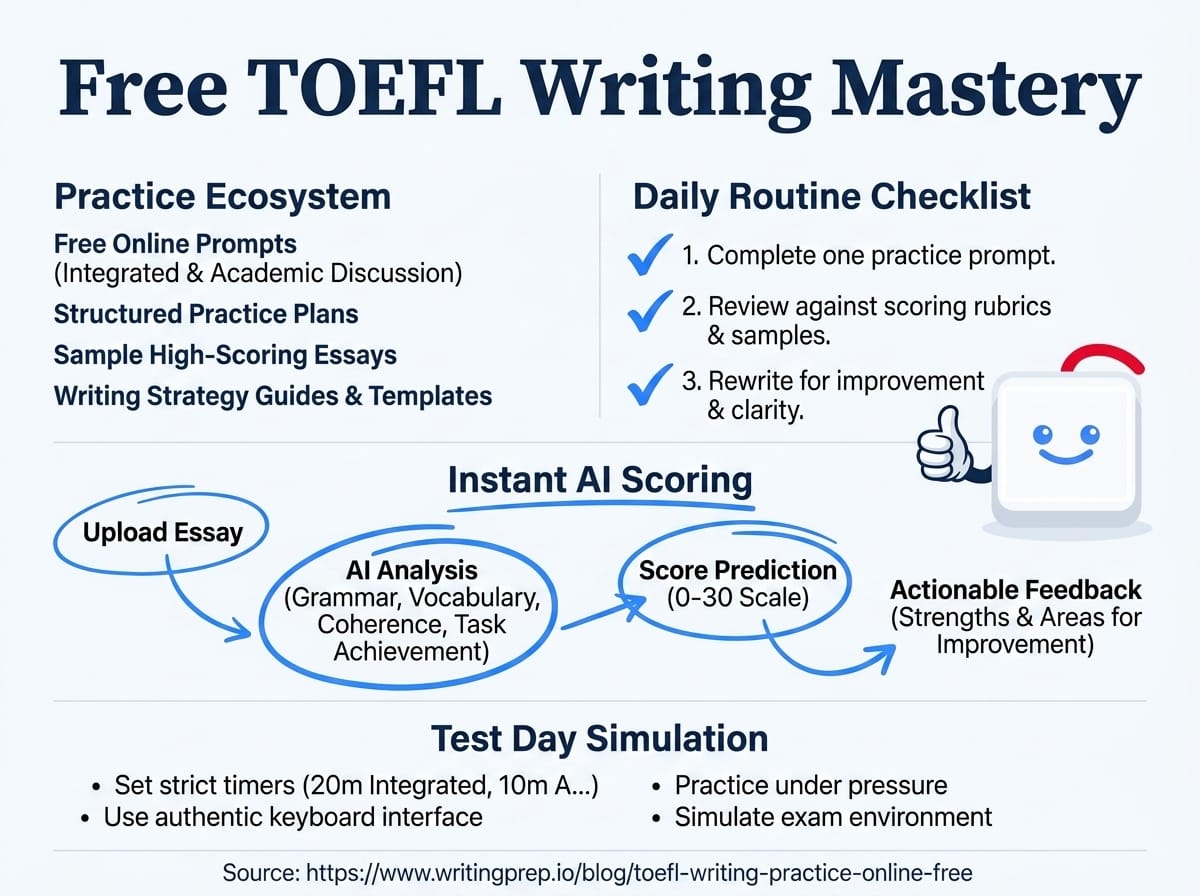
Step 4: Leverage AI for Instant Feedback (WritingPrep)
One of the most effective ways to improve your writing is by getting immediate and detailed feedback. This is where AI tools like WritingPrep shine.
How WritingPrep Helps
WritingPrep uses advanced AI (powered by Gemini) to analyze your essays for grammar, syntax, vocabulary, coherence, and structure. It identifies areas for improvement and provides actionable suggestions, helping you understand why a particular change is needed.
Practice with Real-Time Correction
Submit your practice essays to WritingPrep. The AI will highlight errors, suggest rephrasing, and even offer insights into how your essay aligns with TOEFL scoring rubrics. This instant feedback loop accelerates your learning process, allowing you to correct mistakes before they become habits.
Focus on Specific Skills
WritingPrep can help you pinpoint weaknesses. If you consistently struggle with sentence structure, the AI will point it out, enabling you to focus your practice on that specific area. This targeted approach is much more efficient than general practice alone.
Step 5: Practice Consistently and Review Your Progress
Like any skill, writing improvement comes with consistent effort.
Set a Schedule
Dedicate specific times each week solely to TOEFL writing practice. Regularity is more effective than cramming.
Review Your Errors
Don't just write and forget. After each practice essay, especially after getting feedback from WritingPrep, meticulously review your mistakes. Understand why they were errors and consciously try to avoid them in future essays. Keep a "mistake log" to track recurring issues.
Time Yourself
As you get closer to the test date, practice under timed conditions to simulate the actual exam environment. This will help you manage your time effectively and complete both tasks within the allotted limits.
Conclusion
Excelling in the TOEFL Writing section is an achievable goal with dedicated practice and the right resources. By understanding the task requirements, structuring your essays effectively, utilizing free online materials, and leveraging AI tools like WritingPrep for insightful feedback, you can significantly improve your writing skills. Remember, consistency and thoughtful review are your most powerful allies. Start practicing today, and watch your TOEFL writing score soar!
Ready to get personalized, AI-powered feedback on your TOEFL essays? Visit WritingPrep and transform your writing practice!